 Skip-the-line available
Can you take photos inside the Horta Museum?
No. Phones and cameras go into a free locker before you enter Victor Horta's house and studio, and photography and video are banned throughout.
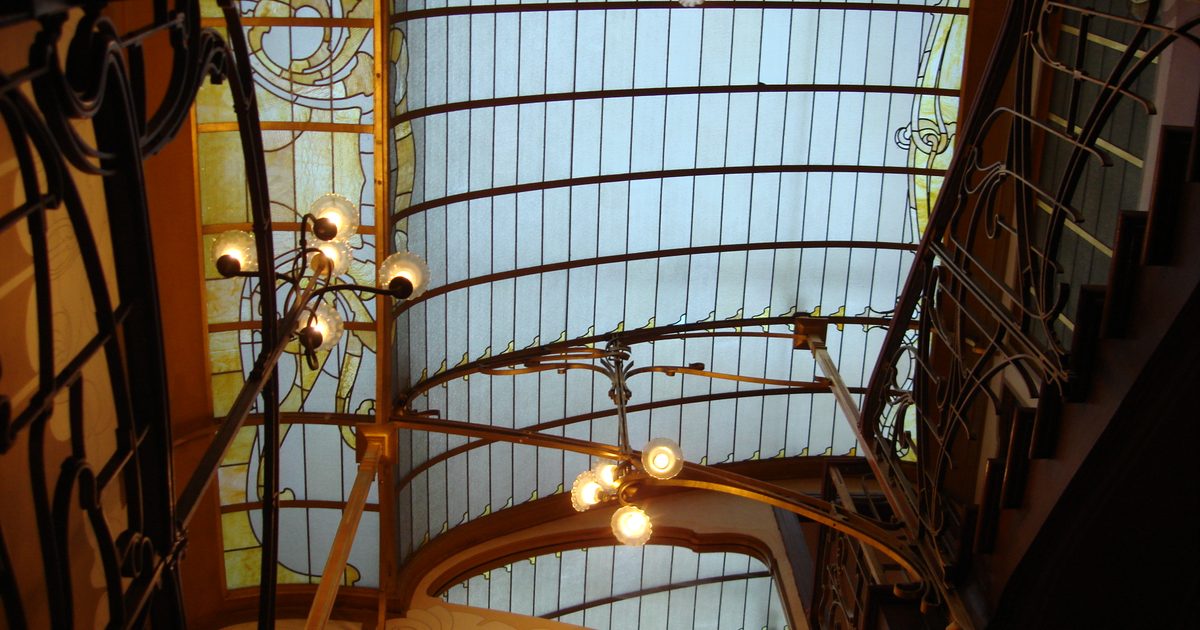
No. Photography and video are strictly forbidden inside Victor Horta's house and studio, and the museum enforces the rule by asking you to leave your phone and camera in a locker before you start. It surprises some visitors, especially those who've seen pictures of the stairwell and its stained-glass skylight. This guide explains exactly what the rule covers, why the museum has it, what goes into the locker along with your phone, and what you can still photograph before and after your visit. It's a rule worth planning around rather than fighting.
What the rule covers
The museum's visitor rules say that photographs and videos are strictly forbidden inside the house and studio during opening hours. Cameras, video equipment and phones aren't allowed into the historic rooms at all unless the museum has given permission in advance.
This applies to everyone on an individual ticket, whatever the device. Keeping a phone in your pocket isn't a workaround: phones have to go into the locker along with cameras. Selfie sticks are banned from the museum's spaces altogether.
Professional photography and filming need prior authorisation from the museum's management. That's a separate arrangement made with the museum, and it isn't something an ordinary entry ticket covers.
The ban covers the whole route through the historic buildings, from the entrance hall of the house to the sculpture workshop in the studio basement. There's no room or landing where it's relaxed.
Why the museum bans photos
The museum gives two reasons. The first is to prevent accidental contact with the collections. The second is to stop people bunching up in narrow spaces.
Both make sense once you're inside. The house was built for a family, not for crowds, and the route runs along narrow corridors and up three flights of stairs, 375 steps in all. Someone stopping on a landing to frame a shot blocks everyone behind them, and stepping back for a wider angle means brushing against walls covered in decoration.
That decoration is the point of the visit, and it's fragile: richly carved wood left in its natural finish, stained glass, mosaic, fresco and wallpaper and, on the staircase walls, one of the largest sgraffito works in Europe. Visitors aren't allowed to touch anything, lean on walls or sit on the stairs. Only the stair handrail may be held.
It also keeps the visit moving at the pace the museum plans for. Entry runs every 15 minutes, with up to 15 people each time, and that rhythm depends on people moving through the narrow spaces rather than queuing behind someone taking pictures.
What goes in the locker
The locker isn't only for phones. The museum requires you to leave all of these at the cloakroom: cameras, phones, bags of any size, umbrellas, coats, walking sticks without a rubber tip, and food and drink. Staff can also ask you to leave any other item they consider a risk to the collections or the building.
Bags of any size means exactly that. A small handbag, a camera pouch and a slim backpack all go in. The lockers are free, they lock with a key, and they're in the reception hall of the annex at 27 rue Américaine.
You collect everything when you finish the route. The museum asks visitors to take their belongings as soon as the visit ends, so don't plan on leaving a bag there while you go on somewhere else.
Items left after closing are kept for 48 hours and then treated as lost property, and perishable food is thrown away at the end of each day. The museum also accepts no responsibility for loss, theft or damage to anything left in the lockers, so leave valuables you don't need at your accommodation.
Your ticket and your phone
Your ticket is scanned as you go in, and the museum accepts it printed or on a phone. If you show it on your phone, the phone goes into the locker afterwards, so have the ticket open and ready before you reach the desk.
A printed copy saves a step, and it's useful if your battery is low. Either works. Keep any proof for a reduced fare, such as a student card or a young person's identity document, in your hand as well, because it's checked at the entrance and your bag will be locked away.
Arriving a few minutes before your entry time gives you room to do all of this without rushing. Entry runs every 15 minutes, and the museum expects you at the time on your ticket. If you arrive late, the museum no longer guarantees the priority access that comes with your booking.
Check your e-ticket before you leave for the museum: the date, the entry time and the number of people. Once your phone is in the locker, you won't see it again until you're back at reception.
Visiting without a camera
Being phone-free changes the visit for the better. With no screens out, the rooms stay quiet, and with 15 places per entry time you're never in a large crowd. You move at your own pace and look properly.
You won't be short of information. Everyone is handed a paper guide in English, French or Dutch at the start, and each room has explanatory texts in the same three languages. There's no audio guide, partly because phones and audio guides aren't allowed in the house. The paper guide stays with you on the route, so you can read about a room while you're standing in it.
If you want to remember the details, watch for the small things Horta designed specifically for this house: coat hooks, door handles and light fittings. Make a mental note of the rooms that stay with you and read about them afterwards. Allow about an hour and a quarter.
If you're with children, give them things to look for: the curves in the iron, the colours in the stained glass, the door handles and coat hooks that are part of the design. Remind them that looking closely is welcome and touching isn't.
What you can photograph
Horta's façade on rue Américaine is the picture to take, from the street. It's an asymmetric front, with delicate ironwork across projecting and recessed sections, a variety of window shapes set freely across it, and leaded glass in the front door.
The best moment is before you go in, while your phone is still in your hand, or after you've collected it from the locker. The entrance is at No. 27, the annex next door, so you'll pass the façade either way.
The garden in front of the reception hall is open to visitors when the weather allows, and it's a pleasant place to sit once you've got your things back. The house's own garden isn't accessible to visitors. On a wet day, the reception hall is where you sort out coats and umbrellas before heading back out.
If you're spending the day on Art Nouveau, Horta's other UNESCO-listed houses in Brussels, Hôtel Tassel, Hôtel Solvay and Hôtel van Eetvelde, have street fronts of their own. We book only the Horta Museum, so check separately how each of them can be visited.
Photographers' sessions
The museum runs separate sessions for photographers. They're organised by the museum as a product of their own, with their own conditions, and they aren't part of an individual entry ticket.
We don't sell them and can't add them to a booking with us. If photography is the whole purpose of your trip, it helps to know they exist before you plan around a standard timed entry, where the camera stays in the locker.
They also show how seriously the museum treats the ban during normal opening hours. Its rules allow photography only in exceptional cases, on the museum's own instructions, and never with flash or a tripod.
For most visitors, a standard timed entry is the right choice. You see the full route at your own pace, and you leave with the façade on your camera and the interior in your memory.
House rules that go with the ban
The photo ban sits within a wider set of rules designed to protect the house. Don't touch furniture, fittings or wall decoration, and don't point at objects with anything in your hand. Keep moving rather than stopping in narrow passages, and don't sit on the stairs.
Staff can ask visitors who ignore the rules to leave. The rules are short, and they're easy to follow once your phone is in the locker and your hands are free.
Under-12s must be with a responsible adult the whole time. If you're visiting with children, talk the no-touching rule through before you go in, because much of the decoration is at a child's eye level.
Eating and drinking aren't allowed in the historic rooms, and smoking is banned. Food and drink go into the locker with everything else, so have a snack before you arrive if you think you'll need one.
Planning your visit around the ban
Think of the visit as two halves: outside with a camera, inside without. Take your façade photos on rue Américaine first, then walk into No. 27 with your ticket ready.
Pack for the locker. A small bag that's quick to empty, a printed ticket if you'd like to put your phone away before you reach the desk, and any reduced-fare proof in a pocket make the start of the visit quick.
Then give yourself the full hour and a quarter. Without a phone you'll probably notice more, and with no audio track to follow, the pace is entirely yours.
Afterwards, collect your things, step out of No. 27 and take a second look at the façade of No. 25 next door. Having seen the rooms behind it, you'll read the ironwork and the windows differently.
Frequently asked
Can I take photos of the stairwell?
No. The stairwell is inside the house, where photography and video are strictly forbidden. Your phone and camera go into a locker before you begin the route. You can photograph Horta's façade from the street before or after your visit.
Is the locker free?
Yes. The lockers are free, lock with a key and are in the reception hall at 27 rue Américaine. Collect your things as soon as you finish the route. They're in the annex, before you reach the historic house.
Can I keep a small bag with me?
No. Bags of any size have to go into a locker, along with coats, umbrellas, food and drink. Keep your ticket and any proof for a reduced fare in your hand.
Can I use my phone as an audio guide?
No. Phones aren't allowed inside the house and studio, and there's no audio guide. You get a paper guide in English, French or Dutch, and the room texts are in those languages too.
Can I photograph the outside of the house?
Yes, from the street. Horta's façade on rue Américaine, with its ironwork and varied windows, can be photographed before or after your visit. The entrance is at No. 27, next door.
Can photographers get special access?
The museum runs separate photographers' sessions, which it arranges itself. They aren't part of an individual ticket, and we don't book them. Professional photography and filming need prior authorisation from the museum's management.
Can I bring a camera to the museum?
Yes, but it can't go into the house or studio. Cameras go into a free locker in the reception hall with your phone and bag, and you collect them when you finish the route.